Stainless Steel vs Brass Jewelry: Which Is Better?
Brass jewelry has the warm golden look at the lowest price — but it tarnishes fast, needs constant polishing, and turns many wearers' skin green. Stainless steel costs slightly more, and in exchange it never tarnishes, never marks skin, and survives water, sweat and years of daily wear. For occasional costume pieces, brass works; for jewelry you plan to live in, stainless steel wins on every practical axis.
The comparison matters because the two metals look deceptively similar in photos — and because brass is the metal behind most of the green-skin and bad-smell complaints in fashion jewelry. Here's the full breakdown.
What Each Metal Actually Is
Brass is an alloy of copper and zinc. Its warm gold-like color comes from the copper — the same copper that makes it reactive: brass corrodes in air and moisture (that's the darkening and the smell), and its copper content is what transfers green marks to skin (the green-skin mechanism).
Stainless steel — jewelry grade 316L — is an iron alloy with chromium and molybdenum. The chromium forms an invisible, self-repairing protective layer that blocks tarnish and corrosion entirely, which is why steel doesn't tarnish, doesn't rust in normal wear, and never marks skin.
The one-line chemistry: brass is reactive by nature; stainless steel is non-reactive by design.
The Head-to-Head Comparison
| 316L Stainless Steel | Brass | |
|---|---|---|
| Color | Cool silver; PVD 18K gold plated for warm gold looks | Warm gold-like (from copper) |
| Tarnish | Never | Yes — darkens within weeks without care |
| Skin marks | None | Green marks on many wearers |
| Smell over time | Neutral after washing | Distinct metallic odor as it corrodes |
| Water, sweat, shower | Unaffected | Accelerates tarnish and skin reaction |
| Care routine | Rinse and dry occasionally | Regular polishing; remove before water |
| Durability | Very high — scratch and bend resistant | Moderate — softer, dents and scratches |
| Price level | Low | Lowest |
The Skin Question: Green Marks and Reactions
This is the deciding factor for most wearers. Brass's copper content reacts with sweat to form green salts that transfer to skin — the classic green ring mark, and the reason brass earrings cause discomfort for many people (full mechanism here). Clear-nail-polish barriers exist as folk fixes, but they wear off in days.
316L stainless steel is formulated for low nickel release and constant skin contact — the same grade family used for surgical instruments. Reactions are rare, green marks essentially don't happen, and the metal is the standard recommendation for people who've reacted to fashion jewelry before.
If a piece has ever turned your finger green or your earlobe itchy, brass (or brass-adjacent unknown alloys) was almost certainly the reason — and steel is the fix.
The Care Economics: A Year in the Life
The honest way to compare these metals is across a year of real wear:
- Brass, month one: warm and golden, no complaints.
- Brass, month three: darkened, needs polishing; green mark appearing under the ring band; smell developing (the odor mechanism).
- Brass, month six: a polishing-cloth relationship you didn't sign up for, or a piece retired to the drawer.
- Steel, every month of the year: identical to day one — rinse occasionally, dry, wear.
That timeline is why "cheapest" and "best value" are different purchases: brass wins the receipt, steel wins the year.
When Brass Is the Right Choice
An honest comparison says when the cheaper metal makes sense: brass works for pieces you wear occasionally and briefly — a statement earring for one evening, a costume piece for a themed event, a trend item you'll wear one season. With no water contact and a polish before wearing, brass delivers its warm look at the lowest possible price for exactly as long as you need it.
It stops making sense the moment a piece is meant for daily wear, water exposure, or a sensitive-skinned wearer — the three scenarios where brass's reactivity turns the price advantage into a liability.
The Steel Upgrade: Getting the Brass Look Without Brass
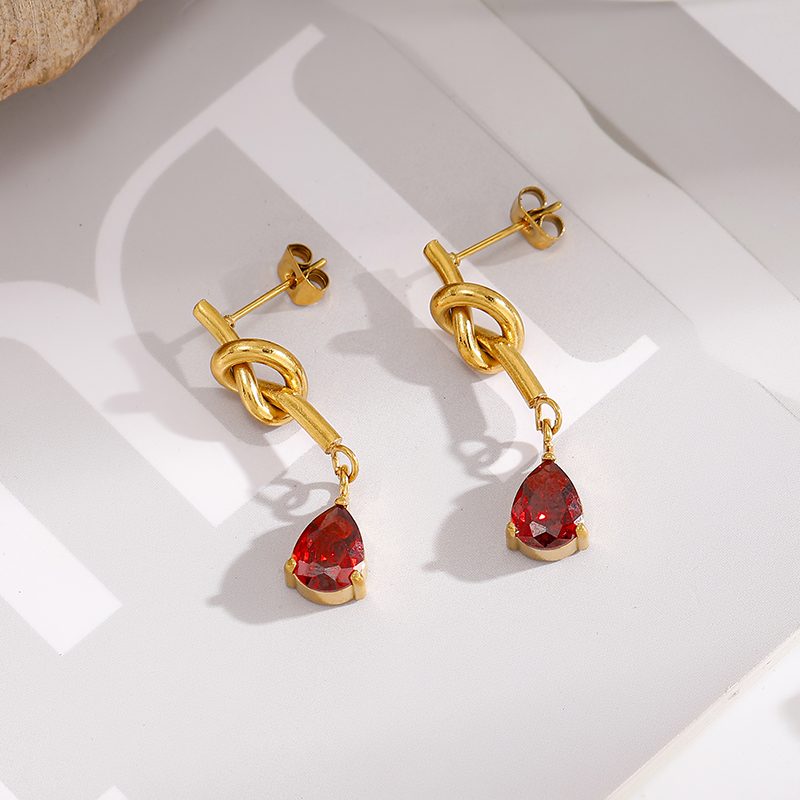
The warm golden look that makes brass appealing now comes to steel through PVD 18K gold plating — a molecularly bonded gold-tone layer over 316L that keeps the brass-like warmth with none of the corrosion. The result wears like the brass look should: gold color that doesn't fade in weeks, no green skin, no polishing routine, water-proof for daily life.
For brands, that combination is also why steel has taken over the fashion jewelry category — the customer gets the look and the wearability, and the return rate tells the story. Browse our collections for what 316L looks like across everyday styles.
FAQ
Does brass jewelry turn your skin green? Yes, for most wearers — brass's copper content reacts with sweat to form green salts that transfer to skin. It's harmless but persistent, and it returns as long as the metal is brass.
Is stainless steel better than brass for jewelry? For daily-wear jewelry, yes — it never tarnishes, never marks skin, survives water and sweat, and outlasts brass many times over. Brass suits only occasional, short-wear costume pieces.
Why does my brass jewelry smell? Brass corrodes against skin acids, and that corrosion has a distinct metallic odor that returns within days of cleaning. It's the alloy reacting — a material issue cleaning can't fix (the smell diagnosis).
Which lasts longer, brass or stainless steel? Stainless steel, by years. Brass darkens within weeks and needs constant polishing to stay presentable; 316L steel looks the same after a year of daily wear as the day it was bought.
Does brass jewelry have any advantage? One: the lowest price for a golden look on pieces worn briefly and occasionally. For costume and single-event pieces, brass is a rational choice — just not for anything you plan to live in.
The Care Comparison: What Each Metal Asks of You
The daily reality of owning each metal, side by side:
| Routine | 316L Stainless Steel | Brass |
|---|---|---|
| After shower/gym/swim | Nothing needed (rinse optional) | Remove beforehand, or polish after |
| Weekly | Optional quick rinse | Polishing check for darkening |
| Monthly | Same as day one | Visible tarnish building; deep polish |
| Skin contact overnight | No issue | Green marks likely by morning |
| Storage | Anywhere dry | Airtight pouch, away from humidity |
The steel column isn't absence of care out of neglect — it's absence of care out of unnecessity, which is the entire material proposition (the 24/7 case).
Brass Jewelry Done Right
An honest guide names the good use cases: brass sealed under thick plating (the plating does the skin-contact work), brass pieces worn rarely and polished lovingly, and brass components in pieces where patina is the design. If you love the warmth of brass and don't mind the ritual, that's a legitimate aesthetic choice — the mistake isn't choosing brass; it's choosing brass expecting steel behavior.
FAQ
Does brass jewelry rust? Brass doesn't rust (that's iron's reaction) but it tarnishes and corrodes — darkening, spotting and developing that metallic smell. Functionally, the outcome resembles rust's: the metal degrades against air and skin while steel stays stable.
How can I tell if my jewelry is brass or stainless steel? Three checks: weight (steel is denser), behavior (brass darkens and marks skin; steel doesn't), and the water test over a week (brass develops patina, steel stays constant). The stamp, when present, settles it — reading marks guide here.
Wholesale Stainless Steel Jewelry from IVANDA
Looking for a reliable stainless steel jewelry supplier? IVANDA supplies 316L pieces with PVD 18K gold plating - waterproof, skin-friendly and made for everyday wear. MOQ 60 pcs per style, in stock and ready to ship, with OEM/ODM services for custom designs. Message us on WhatsApp or email [email protected] for the latest catalog and wholesale prices.
 How to Choose a Jewelry Manufacturer in China
 How to Match Jewelry with Your Outfit (Style Guide)
 Wedding Guest Jewelry: What to Wear (2026 Guide)
 What Finger Does a Ring Go On? Ring Meanings